
Immersive technology × psychological research
Beyond the Screen
Where research becomes an interactive experience.
Active development
- Confidential client
At RenderCore Studios, game technology reaches further than entertainment. This ongoing, confidential VR project sits where immersive simulation, psychological research and human-centred interaction design meet.
Working alongside a university-affiliated PhD researcher in psychology, we are translating research-informed requirements into interactive virtual environments and a steadily evolving software prototype.
- Category
- Immersive Technology / Research & Development
- Project type
- Confidential client collaboration
- Client
- Confidential
- Research collaboration
- University-affiliated psychology research
- Studio
- RenderCore Studios
- Core technology
- Unity · C#
The research challenge
Where research meets real-time technology
Some questions in psychology are hard to study because the situations behind them are hard to stage.
A real-world setting is difficult to reproduce exactly, awkward to adjust in small steps, and slow to reset between sessions. A virtual environment changes that: the same space can be presented again and again, altered deliberately, and stopped at any moment.
That control is what makes immersive technology interesting to researchers — and what makes it demanding to build. The environment has to be convincing enough to matter, yet never careless about the person inside it.
- 01
Believable, but bounded
Spaces need enough presence to be taken seriously, without overwhelming the person experiencing them.
- 02
Understandable interaction
Someone new to VR should always know where they are, what they can do, and how to stop.
- 03
Adjustable by design
Scenarios have to be organised so they can be varied and repeated, not rebuilt each time.
- 04
Two vocabularies
Research objectives must become concrete software requirements — a translation that only works as a collaboration.
The objective
Building experiences with purpose
Our role is to turn research-informed requirements into real-time environments that can be explored, adjusted and refined.
- Immersive environmental design
- Interiors, corridors and tunnels built to feel coherent and present.
- Scenario development
- Distinct virtual situations that can be entered, completed and repeated.
- First-person VR interaction
- Hand presence, pointing and selection that behave predictably.
- Modular scenes
- Environments assembled from reusable sections so they can change with the research.
- Interface usability
- In-world panels and controls that read clearly inside a headset.
- Exploration & navigation
- Movement and orientation that keep the user aware of where they are.
These are the project's objectives. The sections that follow show what has been built so far — and say plainly what has not.
Stage one
Where it began — early prototypes
The first builds were about proving the basic loop: enter the application, choose how and where to begin, move through a space, and finish cleanly.
Early development / prototype footage
Screenshots from early builds, captured in the Unity editor through an XR device simulator.
They are rough and unfinished by design — placeholder hands, simple menus, lighting still to be worked out — and they were the fastest way to put something tangible in front of the research side of the collaboration.
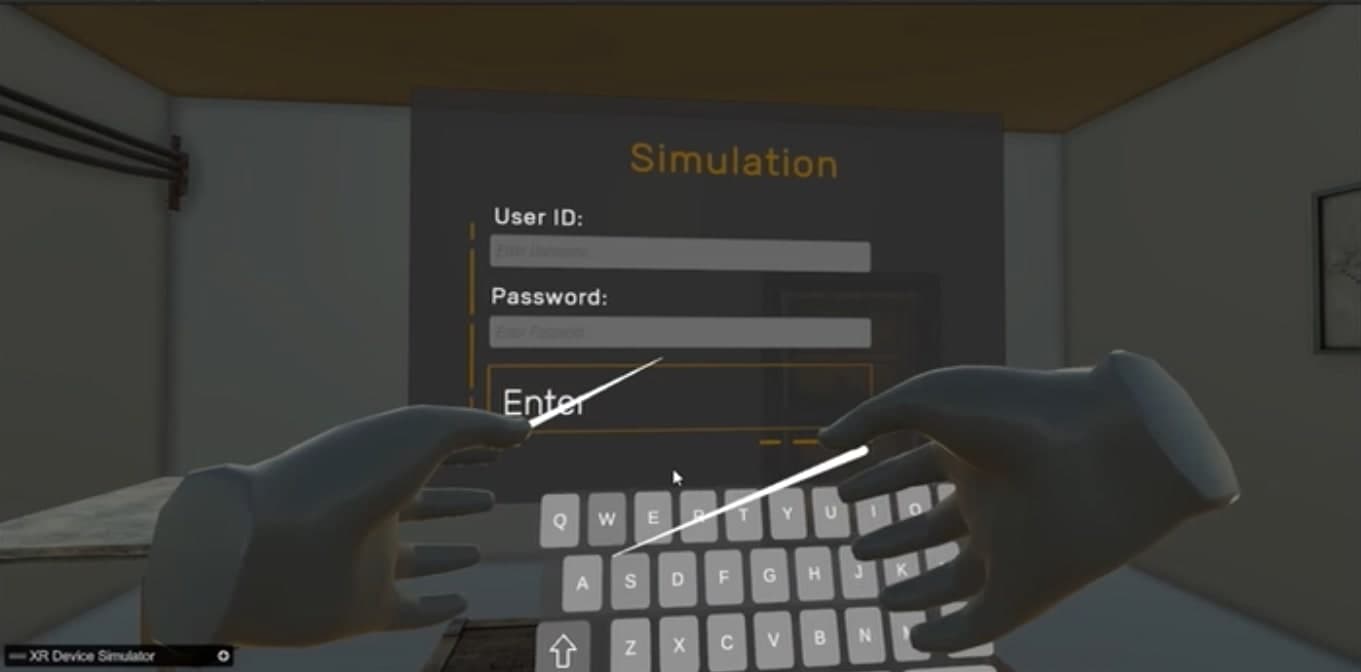
Step 01
Sign in
A session begins at an in-world panel with an on-screen keyboard.
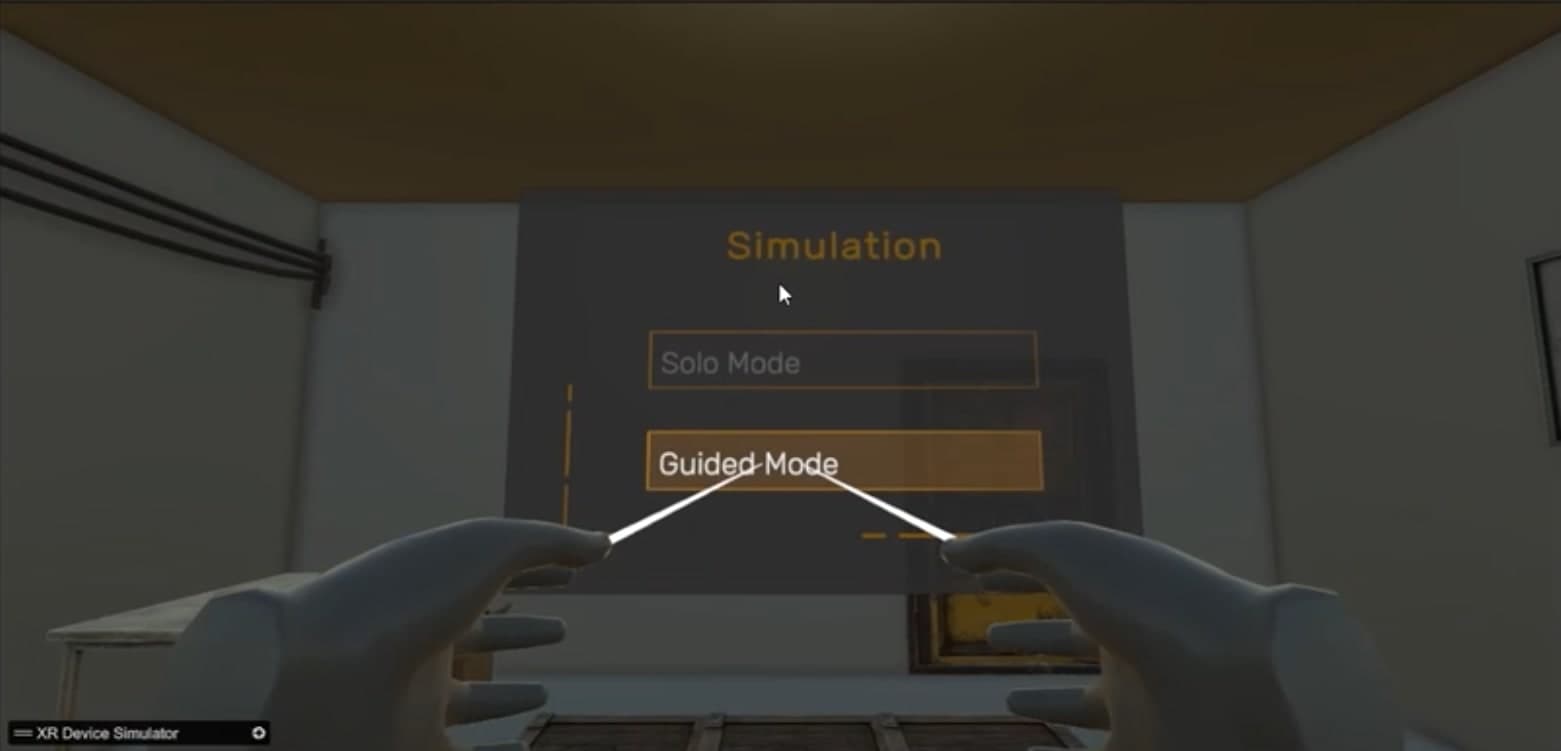
Step 02
Choose a mode
The menu offers a guided and a solo mode — the two ways the experience is intended to be used.
Step 03
Choose an environment
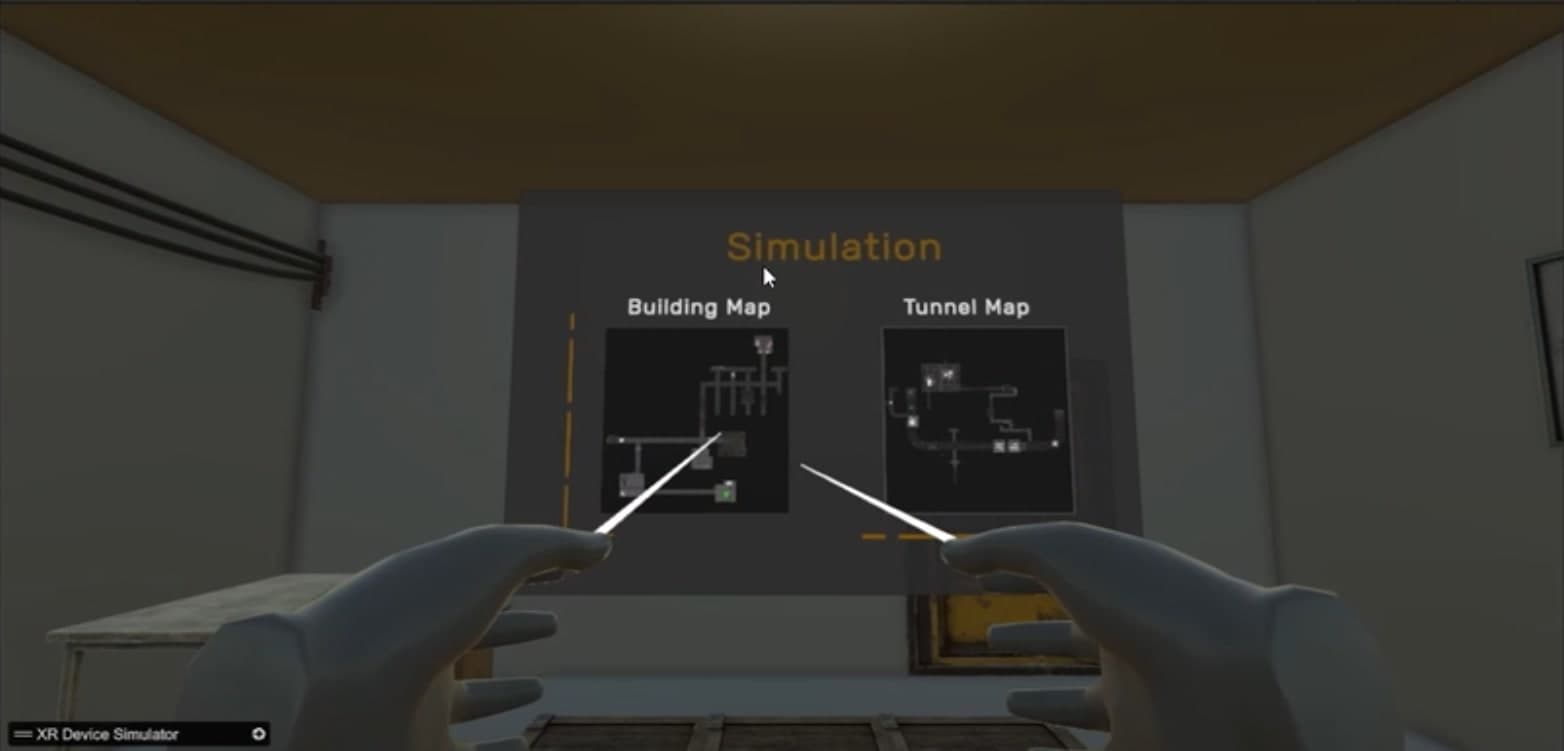
Two scenarios are available from the start: a building interior and a tunnel.
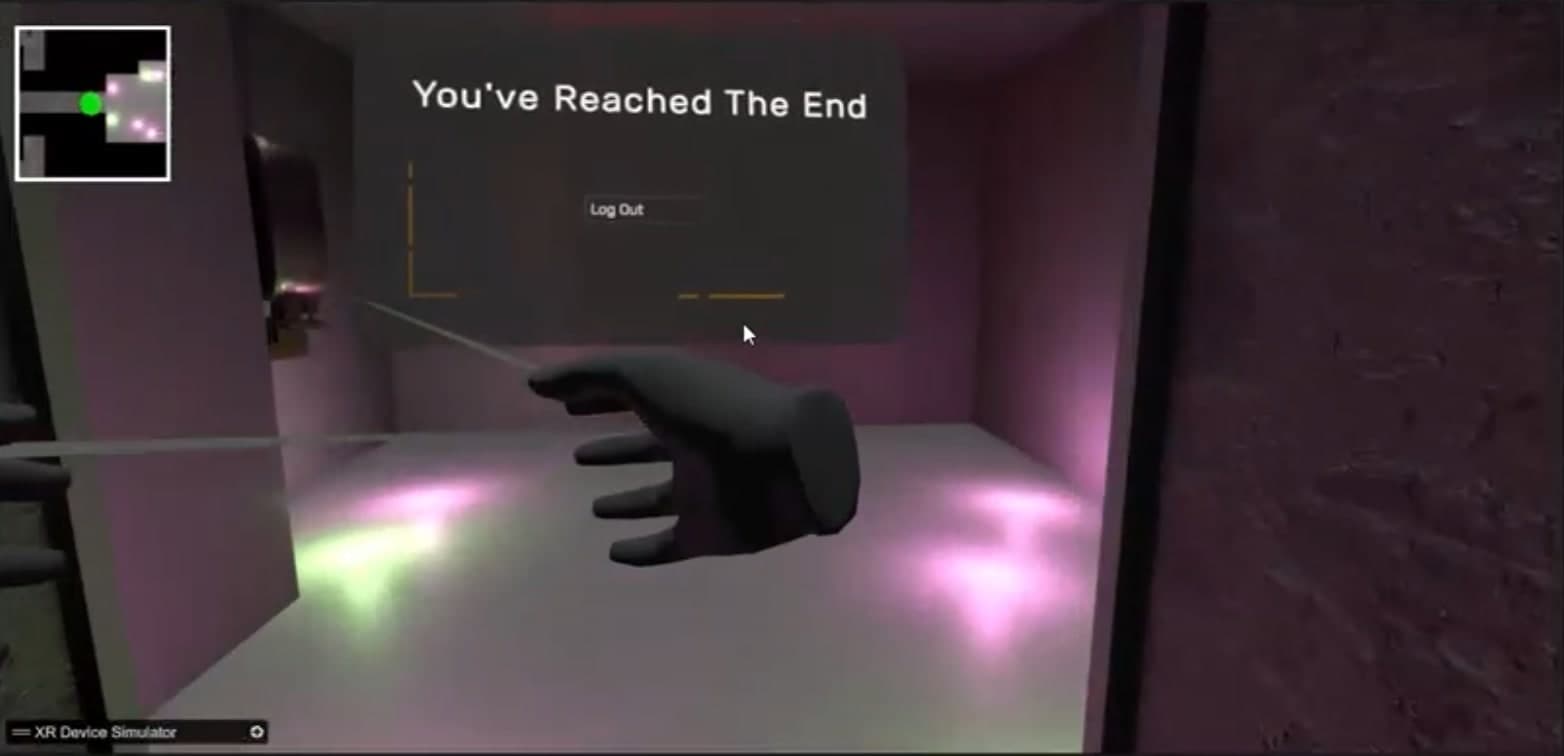
Step 04
Reach the end
A completion panel closes the session and offers sign-out.
First environments
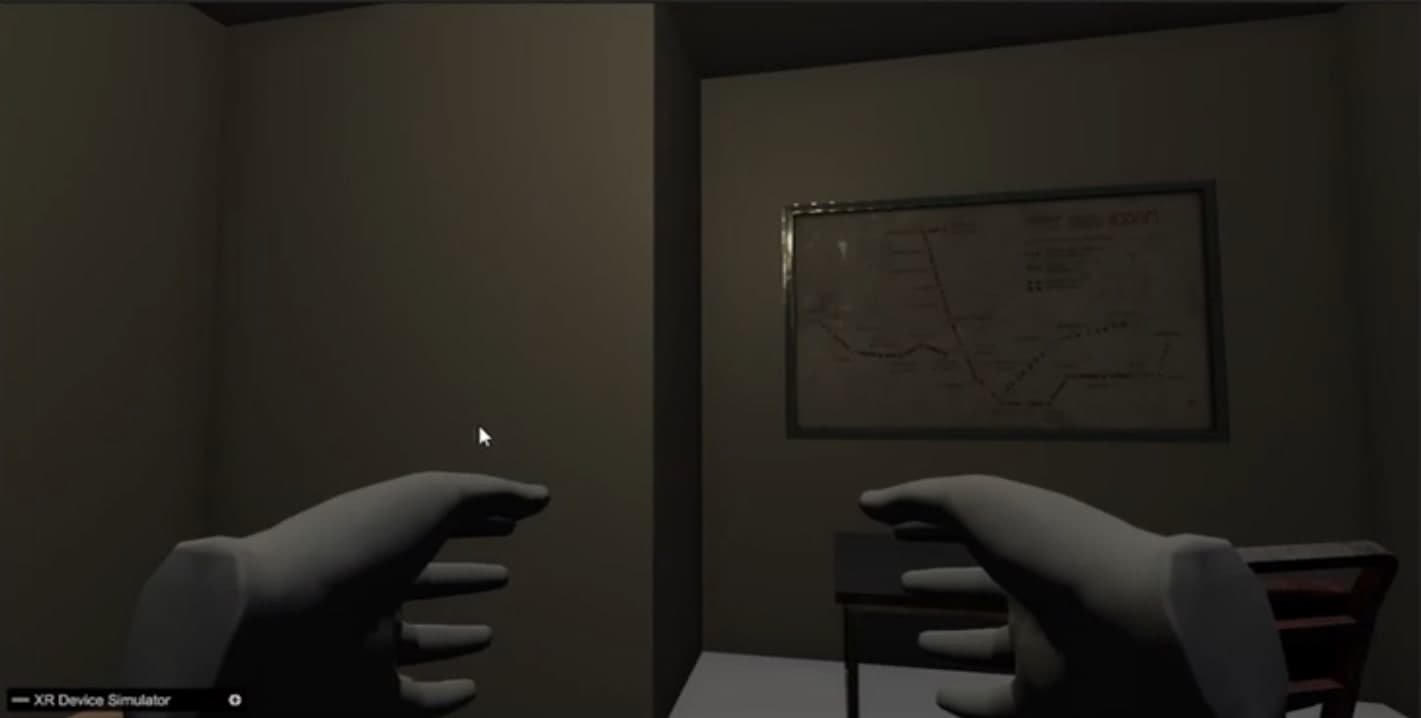
An interior room with a wall map — one of the first furnished spaces. 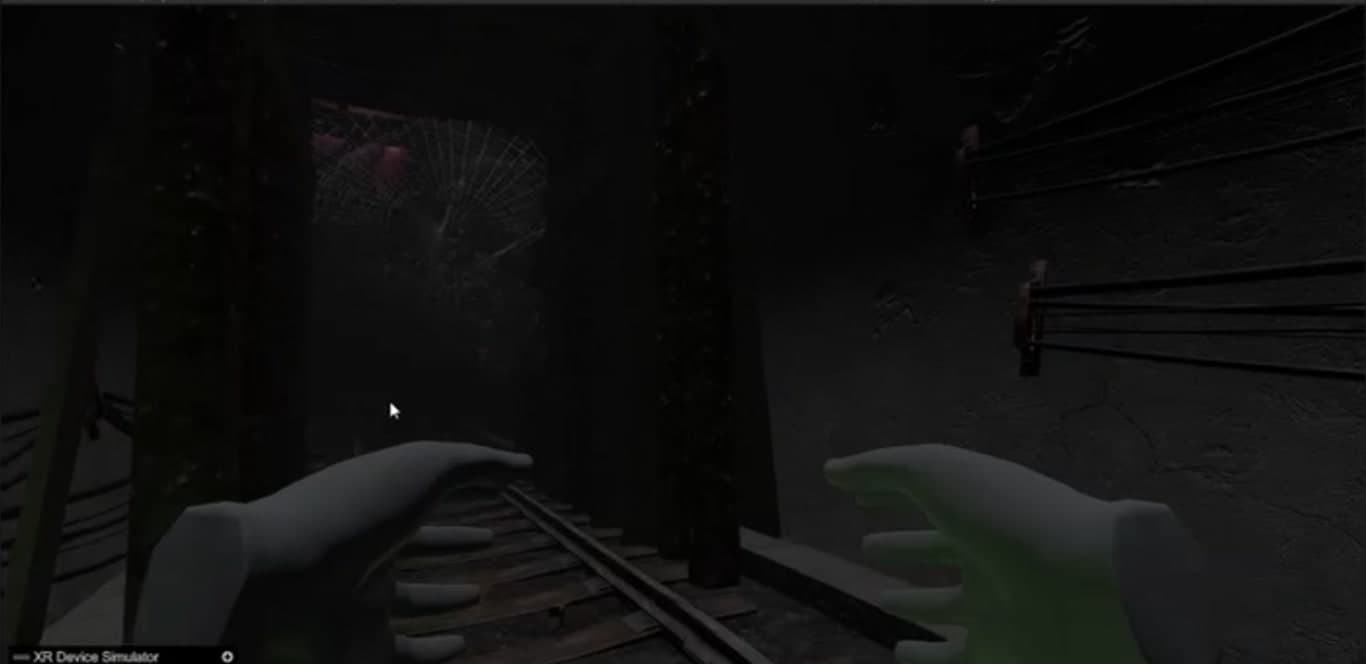
An early tunnel section: rails, supports and a web across the path. 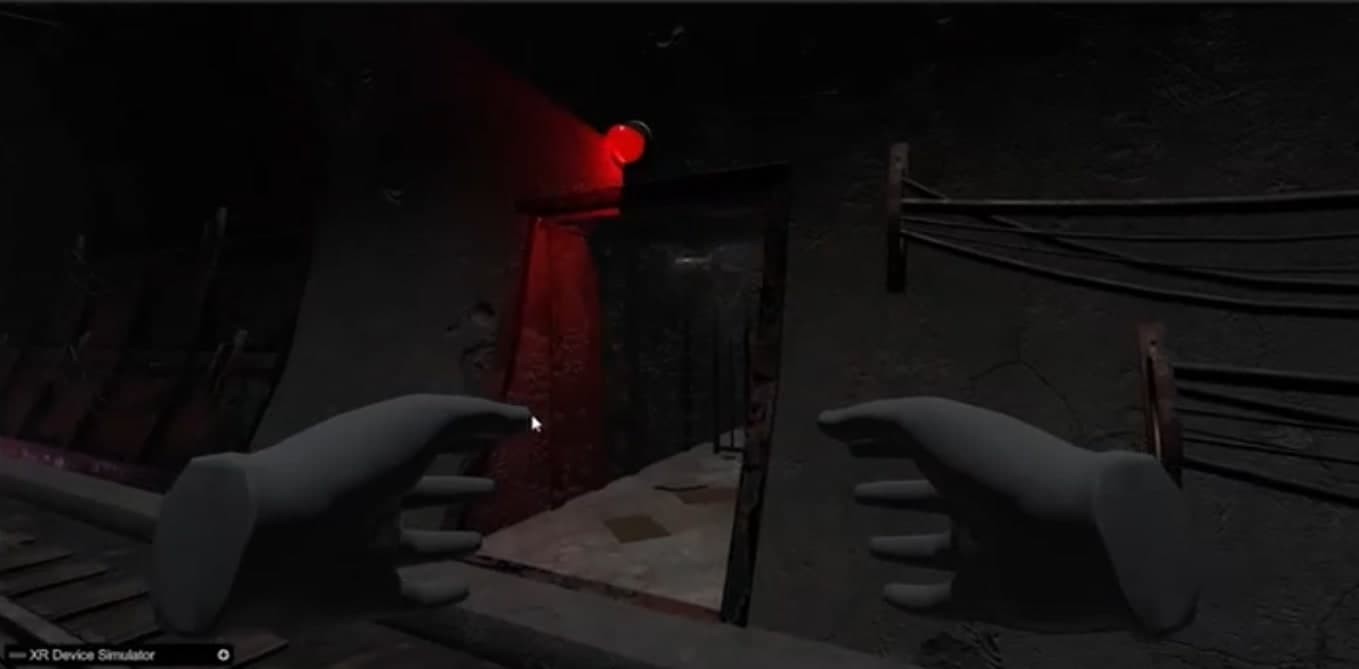
A red-lit doorway at the side of the tunnel. 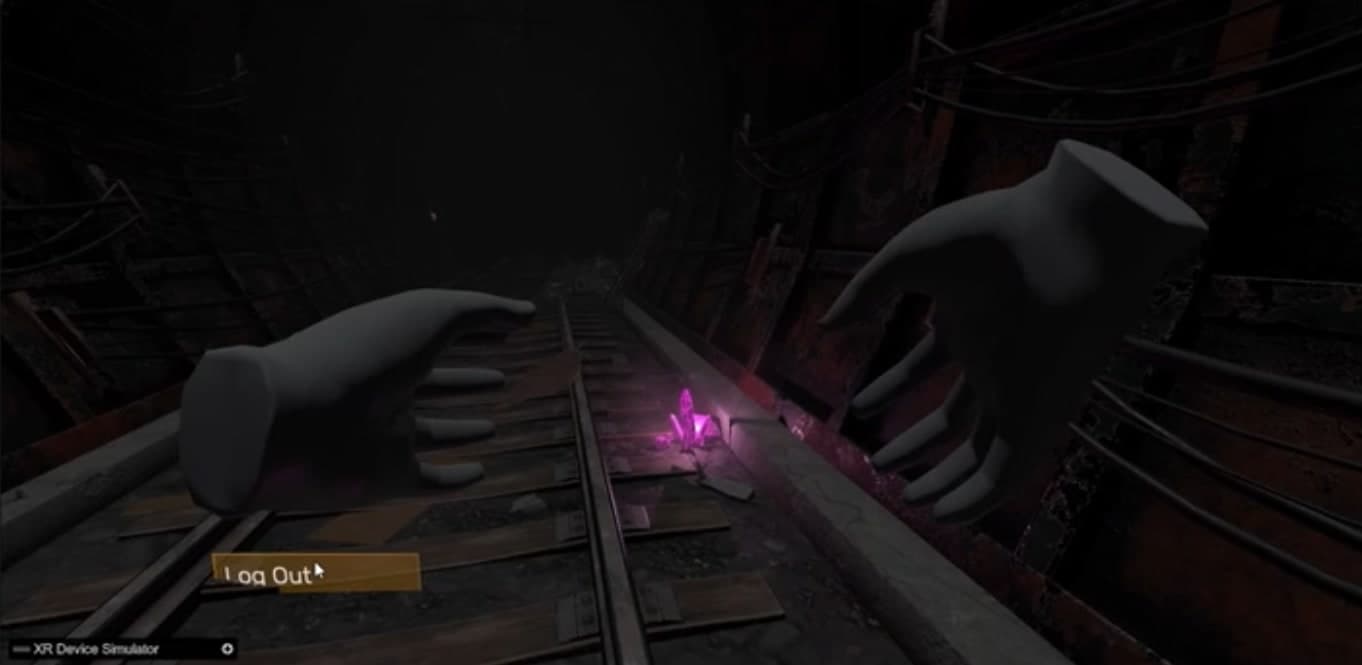
Tunnel track with a glowing marker and an in-world sign-out control. 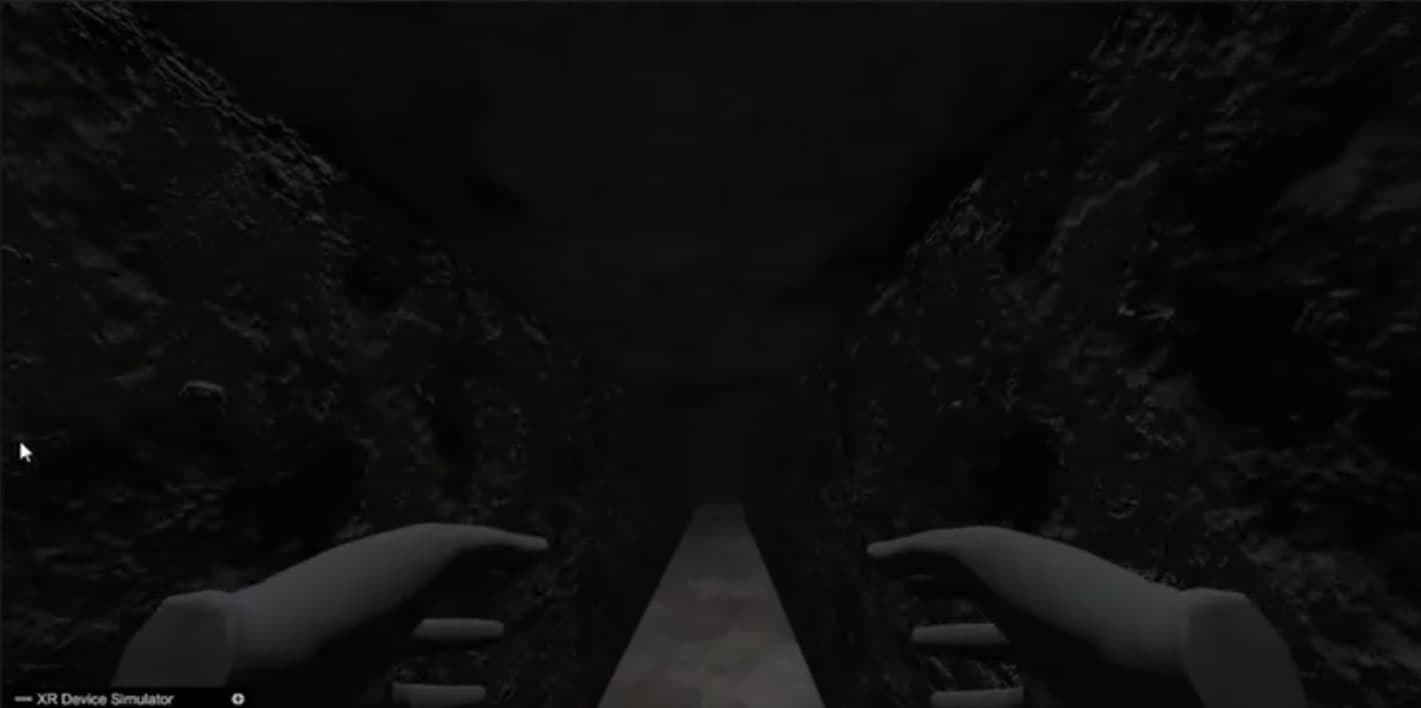
A narrow rock-walled passage.
Technical work
Engineering the experience
The project is built in Unity and programmed in C#. The work divides into six areas.
- 01Unity development
- Real-time scene creation, application structure, environmental systems, and interactive experiences.
- 02C# programming
- Application logic, user interaction, system behaviour, and game-side programming.
- 03Virtual reality interaction
- First-person presence, spatial input, interactive interfaces, and simulated hand interaction.
- 04Environment development
- Construction and refinement of virtual interiors, passages, tunnels, and navigable 3D spaces.
- 05Research-driven iteration
- Adapting interaction design decisions and development priorities to evolving research requirements.
- 06User experience considerations
- Readable interfaces, understandable interactions, visual comfort, and predictable navigation.
Stage two
The experience today — latest development build
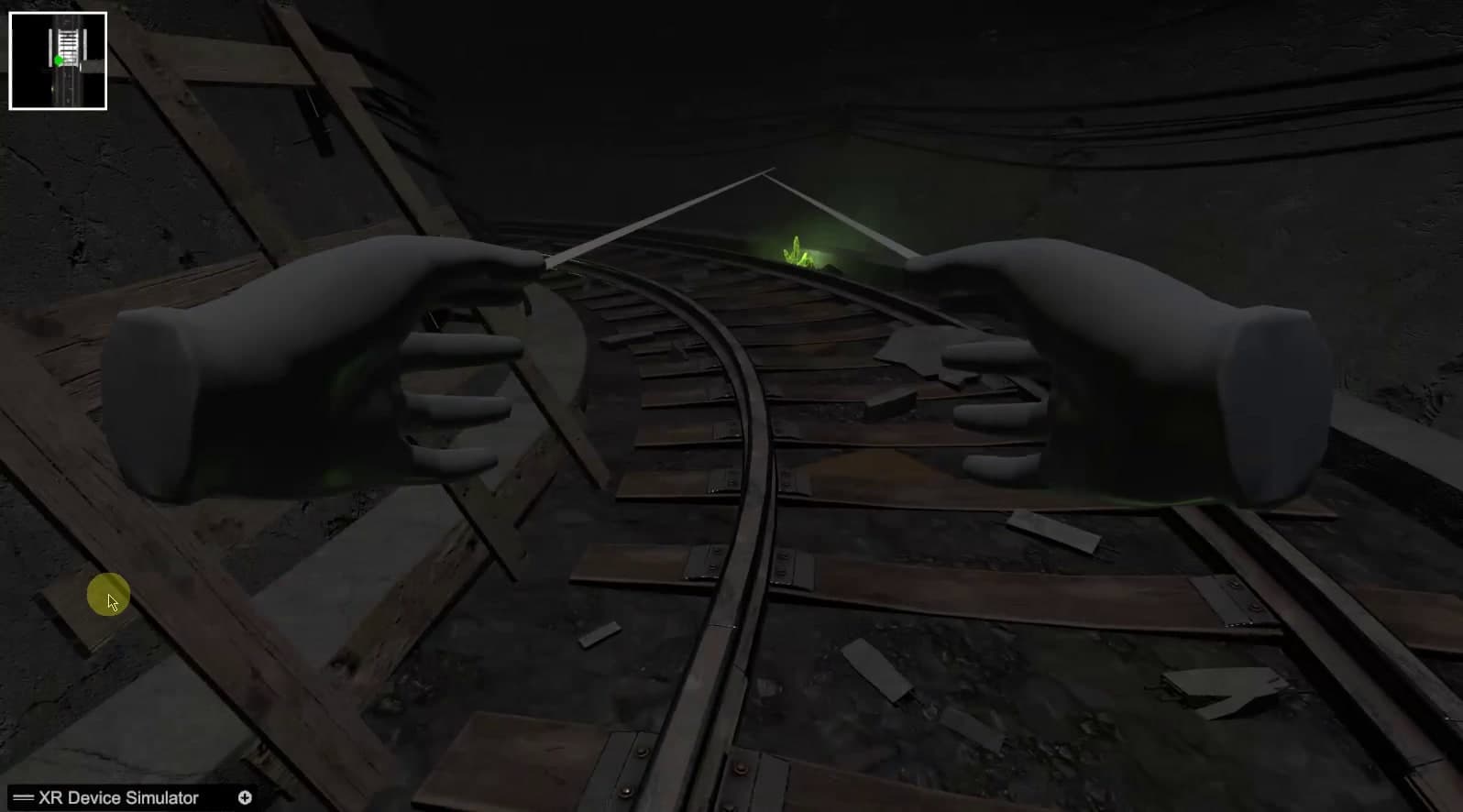
These recordings show the build as it stands: two scenarios navigated in first person with hand presence and ray pointers, a minimap for orientation, and environments that have gained structure, props and lighting cues.
Latest development build · Recorded October 2026
They are captured in the Unity editor through an XR device simulator — development footage, not a headset capture — and are shown without sound.
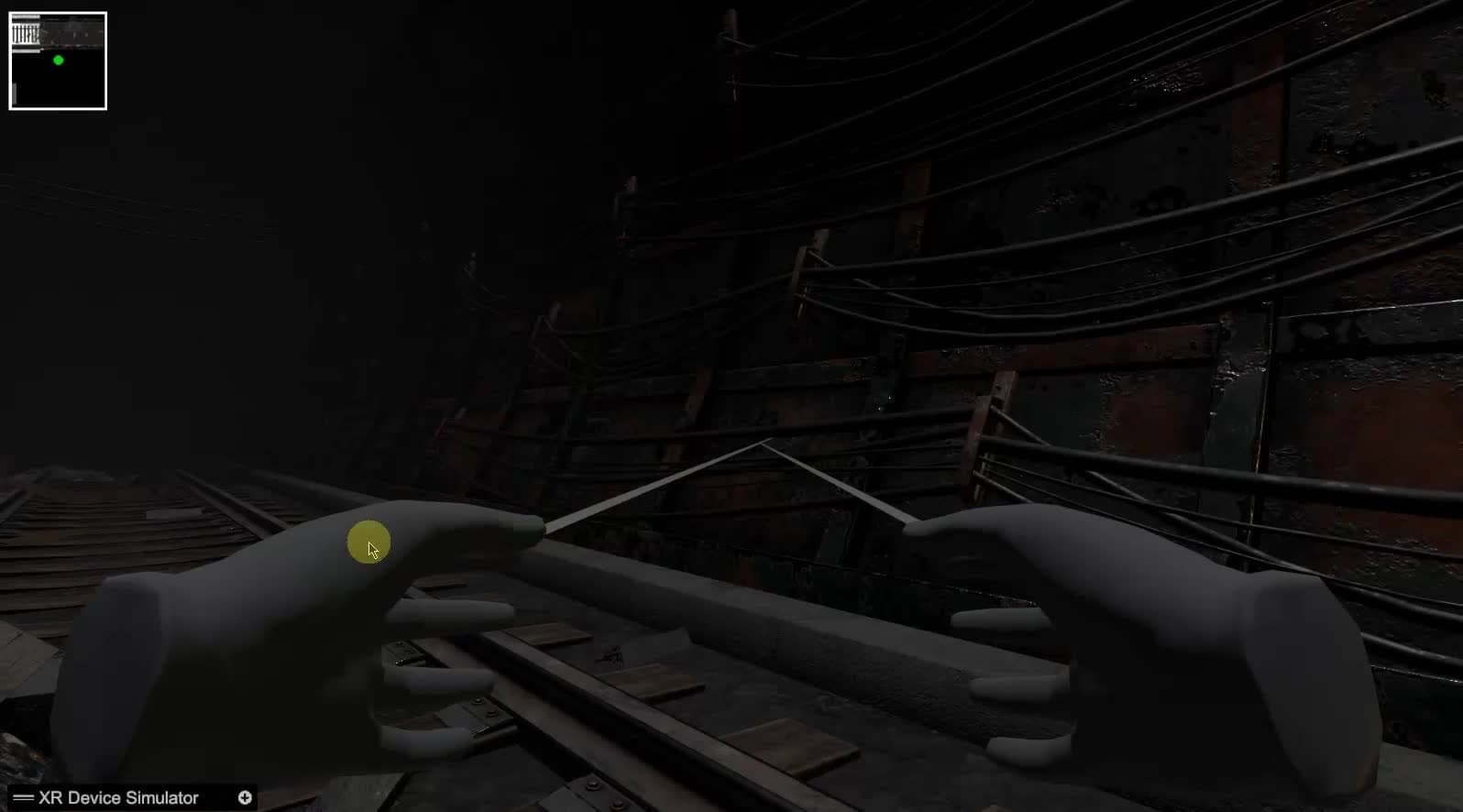
Moving along the rail tunnel past lighting cues, a web across the track and the first glowing markers.
4 recordings · 01 selected
Development journey
From experimentation to refinement
Between the first prototypes and the current build, the work has followed a plain loop: try an idea, put it in front of the people it is for, keep what holds up, and rework what does not.
The comparison here is deliberately modest. It shows the same kind of scenario — the rail tunnel — at two points in development. This page reports no performance figures and no research outcomes.
Early prototype
Latest build
Shown in footage
Visible in the screenshots and recordings on this page.
- Sign-in panel with on-screen keyboard
- Guided and solo mode selection
- Two selectable environments
- First-person movement with hand presence and ray pointers
- Minimap
- Completion and sign-out flow
In development
Being worked on; not yet shown as finished.
- Environment refinement and lighting
- Expanded interaction systems
- More configurable scenarios
- Usability and comfort
- Session workflow
Research-stage directions
Described in the project's design material; not implemented claims.
- Facilitator-side controls
- Session monitoring
- Physiological feedback
Visual development
Development gallery
Both stages side by side. Every image is tagged with the stage it comes from.
21 images shown
Collaboration
Designed at the intersection of two disciplines
Neither discipline could build this alone.
Psychological research informs
- The purpose and structure of each immersive scenario
- User-centred design considerations
- What a controlled environmental experience needs to be
- How sessions progress and are organised
- Continued, research-informed refinement
Game-development engineering provides
- 3D environments
- Real-time rendering
- Interactive systems
- VR interfaces
- Spatial navigation
- Technical implementation and iteration
The research defines what an experience is for; the engineering works out how it can exist. Decisions travel in both directions.
Challenges & approach
Solving problems beyond the screen
The considerations that shape day-to-day development. These are ongoing work, not finished achievements.
01
From objective to requirement
A research aim is not a specification. Each one is worked through together until it can be expressed as something a scene, a control or a setting can do.
02
Immersive, but legible
Dark, enclosed spaces are easy to make disorienting by accident. Orientation aids such as the minimap and consistent lighting cues are being used to keep each space readable.
03
First-person interaction
Pointing, selecting and typing with virtual hands has to be predictable. The ray pointers and in-world panels in the footage are the current approach, and are still being tuned.
04
Several scenarios, one application
The building and tunnel scenarios share one entry flow and one interaction model, so further environments can be added without starting again.
05
Modular structure
Scenes are assembled from reusable sections so they can be rearranged as requirements change.
06
Comfort and usability
Movement, the readability of text and the ability to end a session cleanly are treated as requirements rather than polish.
What comes next
The journey continues
The project remains in active development. Work ahead may involve:
- 01Further environment refinement
- 02Expanded interaction systems
- 03More configurable scenarios
- 04Research-informed usability improvements
- 05Continued development of session workflows
- 06Exploration of additional monitoring or feedback integrations
No deployment schedule, commercial release or research findings are being announced.
This case study describes research software in active development. It is not a medical device or an established treatment, and no clinical outcomes are claimed. The client, the institution and the project's name are withheld by agreement.
Collaboration
Have a research-driven idea?
From immersive research environments to experimental interactive systems, RenderCore Studios works at the intersection of creative technology and practical development. If you're exploring how real-time game technology, virtual reality, or interactive simulation could support your next project, we'd be interested in the conversation.